

At A-INSIGHTS, we often talk about flipping the 80/20 script. Why? Because too many market intelligence teams spend their time looking backward (reporting what already happened), rather than focusing on what it means for the business and what to do next. To put it simply, in market intelligence, the real advantage comes when leaders move beyond reporting the present and start anticipating what will happen next.
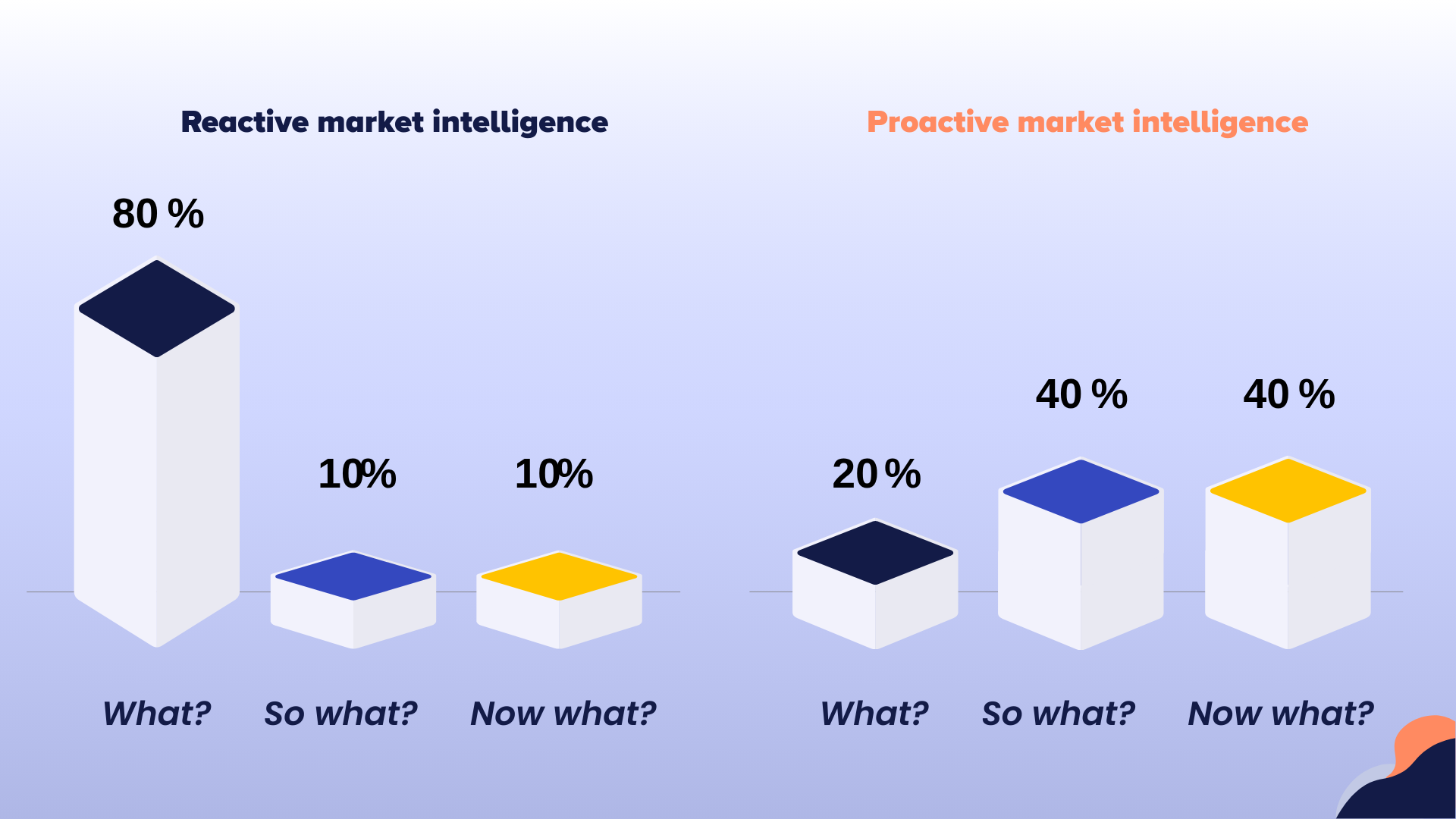
Two recent customer projects, operating in the food logistics market, illustrate this shift:
- European logistics group: Growth was slowing in a mature market. Instead of relying on shipment history, the team asked which categories and customer segments were about to grow fastest. Our analysis gave them a five-year view of demand, showing exactly where opportunities would open before competitors reacted.
- Global cold storage operator: In a regional hub where every major site was already full, leadership needed to decide whether to expand. The question was urgent: without new capacity, unmet demand would quickly escape to competition. Our market intelligence showed where demand would intensify next and which sectors justified investment, giving the board confidence to move forward.
These are practical examples of market intelligence used not only to explain the present, but to help leaders act before the market shifts.
Case Study 1: Finding growth in a mature market
Context
A major logistics provider wanted to reassess its position in a mature but overlooked national market. Leadership needed fresh insights to guide account planning, budget discussions, and long-term growth strategy.
Approach
We built a five-year demand projection for the country’s food logistics market. Category trends were mapped to show where growth would come from, while a customer view of retailers and operators revealed unmet needs in logistics support.
.png)
Impact
Executives received a clear demand outlook to steer investment planning. Sales teams redirected resources toward higher-potential categories. Leadership could also see opportunities that competitors had not yet addressed, strengthening positioning in strategic accounts.
Case Study 2: Expansion in a capacity-constrained hub
Context
A global cold storage operator was weighing whether to build a new facility in one of its priority regions. Existing facilities across the market were already running at maximum capacity, leaving no buffer for demand growth. Leadership needed clarity on whether expansion was justified and, if so, how to enter in a way that created a sustainable advantage.
Approach
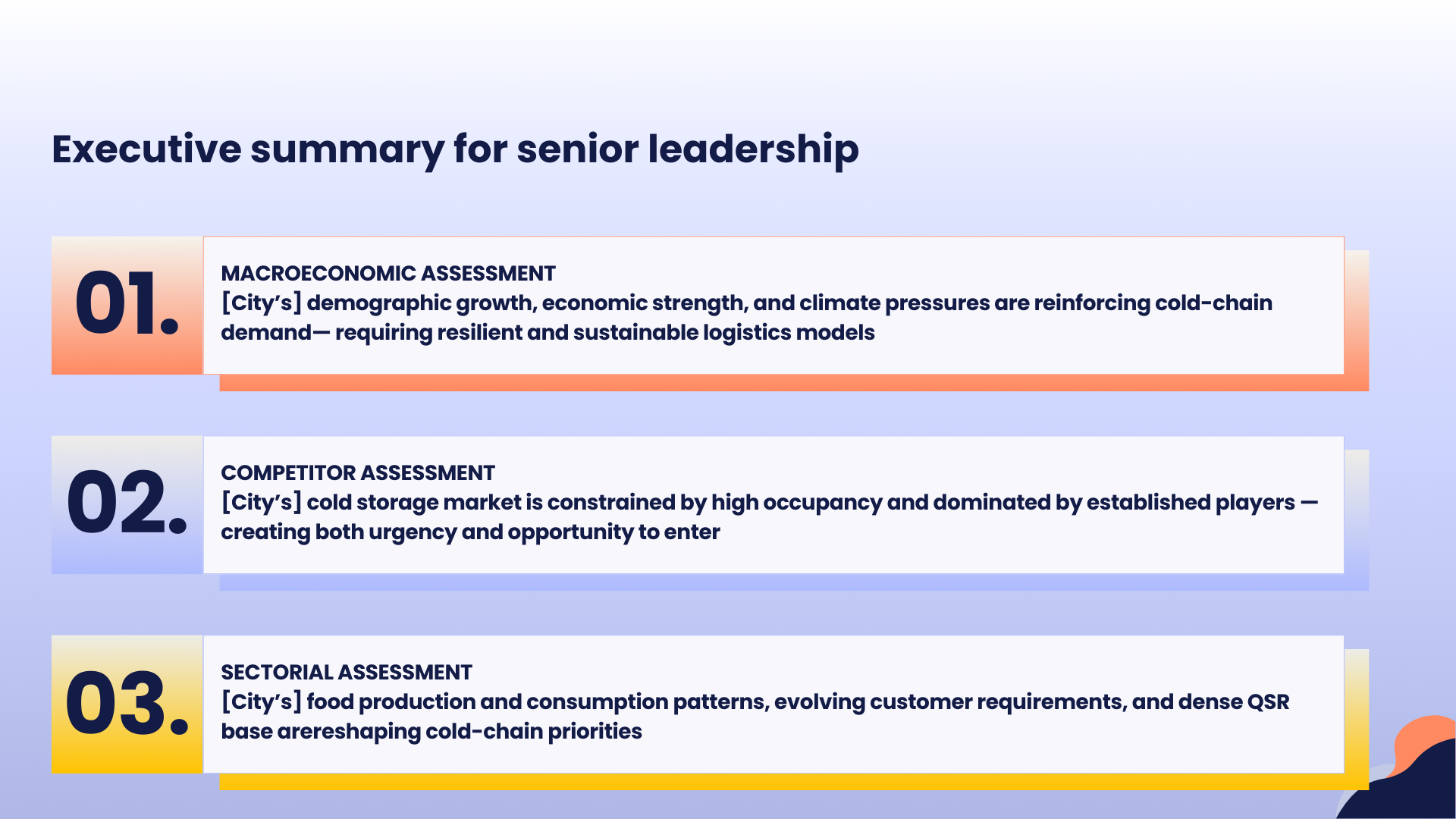
We assessed three dimensions:
- Market outlook: Long-term demographic and economic growth trends were reinforcing demand for cold-chain services, while rising costs and new sustainability requirements were reshaping how facilities needed to operate.
- Competitive pressure: A small group of established players dominated the market, and most major customers were already locked into dedicated partnerships. Future capacity pipelines were limited, meaning that timely entry was essential to capture open demand.
- Customer requirements: Food producers, retailers, and foodservice operators were seeking more complex logistics support, including multi-temperature handling, value-added services, and wider coverage as consumer habits shifted.
Impact
The analysis gave leadership a clear view of both the risks and opportunities of expansion. It showed that capacity constraints were structural, that competitors’ planned projects would not fully meet future demand, and that unmet needs existed in several fast-growing customer segments. With this intelligence, the board was able to move forward with confidence, aligning investment to the areas with the strongest long-term commercial potential.
From Reactive to Proactive
Both cases show what happens when market intelligence is used to anticipate rather than react.
- Leadership teams gained visibility three to five years ahead, replacing guesswork with foresight.
- Strategic plans moved earlier into growth segments and allocated resources more effectively.
- Boards and investment committees could make major decisions with confidence, supported by clear evidence.
.png)
For food logistics executives, the lesson is straightforward: competitive advantage comes not from chasing data, but from acting before the market turns.


